READING, PA APPLIANCE LEAK WATER EXTRACTION
Facing severe water intrusion, concrete moisture migration, or structural saturation in Reading? Flood Help Now connects you with equipped local mitigation crews for rapid high-volume liquid extraction and psychrometric drying.
Reading, PA Moisture & Structural Factors
Specific environmental and infrastructure conditions affecting Reading structures:
- Old, narrow housing. Majority of homes built before 1940, many late-1800s/early-1900s row homes and twins built for factory workers; hillside lots near Mount Penn and low-lying river neighbourhoods in FEMA flood zones both create moisture/cold vulnerability. readinginsulation.com ↗
- River / valley. Reading sits in the Great Valley between ridges with the Schuylkill River through the valley floor; low-lying neighbourhoods are in FEMA-designated flood zones requiring attention to basement/crawlspace moisture. readinginsulation.com ↗
- Soil + old pipes. Berks County geology combines heavy red clay with fractured shale that moves with moisture/temperature and stresses buried pipes/foundations; older neighbourhoods (Hampden Heights, Oakbrook, South Side) were built on this clay with cast-iron and clay-tile sewers approaching/exceeding a century of service. Rotorooter.com ↗
- Pipe eras by neighbourhood (practitioner claim). Brick rowhouses in the core with original cast iron/clay tile; mid-century Wyomissing/Shillington homes with galvanised and early copper; newer Sinking Spring construction with PEX/CPVC. Rotorooter.com ↗ Practitioner claim
- Appliance mechanism (Reading-specific). Washing machines, dishwashers and water heaters release grey water into flooring/subfloor, and in a narrow home it reaches the full width fast; upper-floor supply/fixture/tub failures empty into joist bays and through every ceiling below. rotorooter.com ↗
- Freeze link. A hard Pennsylvania cold snap reaches lines in unheated back rooms and along outside walls; the split usually delivers water on thaw, not on the coldest night. rotorooter.com ↗
- Washer-hose risk (national insurer-cited data, not Reading-only). Broken washer supply hoses account for more than half of washer-related water-damage claims, average claim >$6,000 in the insurer-cited data; risk rises after 5 years, with >50% of hose failures before 8 years and ~80% before 10 years; replace hoses every 5 years, preferably steel-jacketed. news.leavitt.com ↗ Insurer-cited — label as national data
5-Step Emergency Extraction Protocol in Reading
When an independent contractor arrives at your Reading property, they implement systematic structural drying protocols:
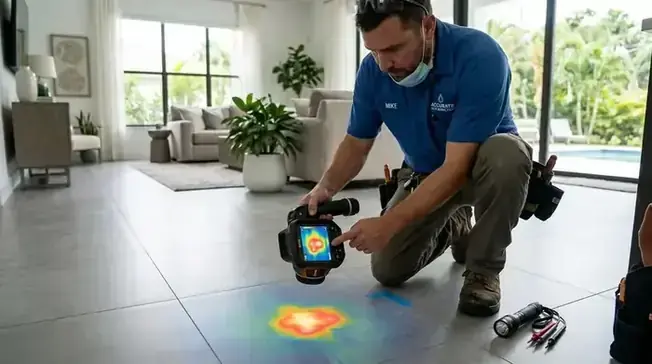
Non-invasive thermal imaging and pinless moisture meters locate hidden liquid paths through concrete slabs, flooring underlayment, and drywall cavities.
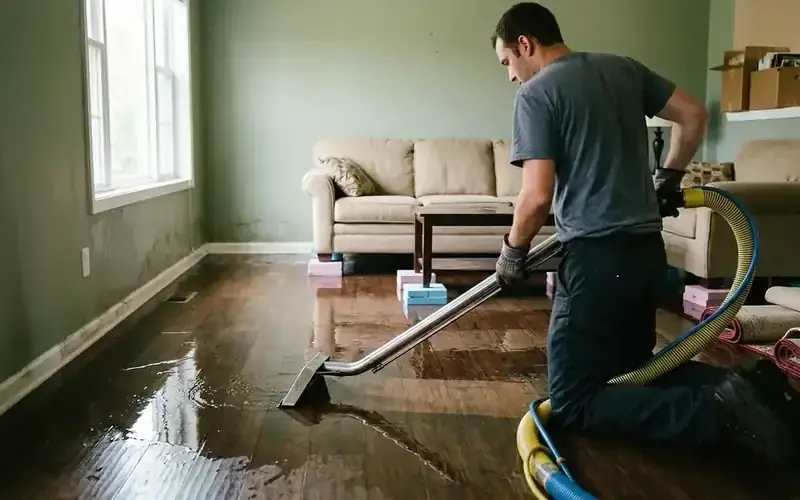
Truck-mounted extractors and submersible pumps remove standing liquid to prevent subfloor delamination and baseboard warping.
EPA-registered botanical antimicrobials sanitize porous structural subgrades and neutralize odor-causing bacteria.
Low-grain refrigerant dehumidifiers and centrifugal air movers create low-humidity vortexes to evaporate bound moisture from structural lumber.
Daily relative humidity, temperature, and GPP readings logged to document structural dryness readings for your insurance adjuster.
Clean Water
Originates from broken supply lines or sink overflows. Turns into Category 2 within 24–48 hours if trapped.
Grey Water
Discharge from washing machines, dishwashers, or sump pumps. Requires controlled padding removal.
Black Water
Sewage or flood runoff. Highly hazardous; requires antimicrobial treatment and containment barriers.
Covered ZIP Codes in Reading, PA
Emergency dispatch covers property owners and commercial facilities across all verified postal codes in Reading:
Surrounding neighborhoods and townships served: Centre Park, College Heights, Hampden Heights, Oakbrook, Glenside.